Home Sellers
How Do Nearby Active Listings Affect Your Selling Plan?
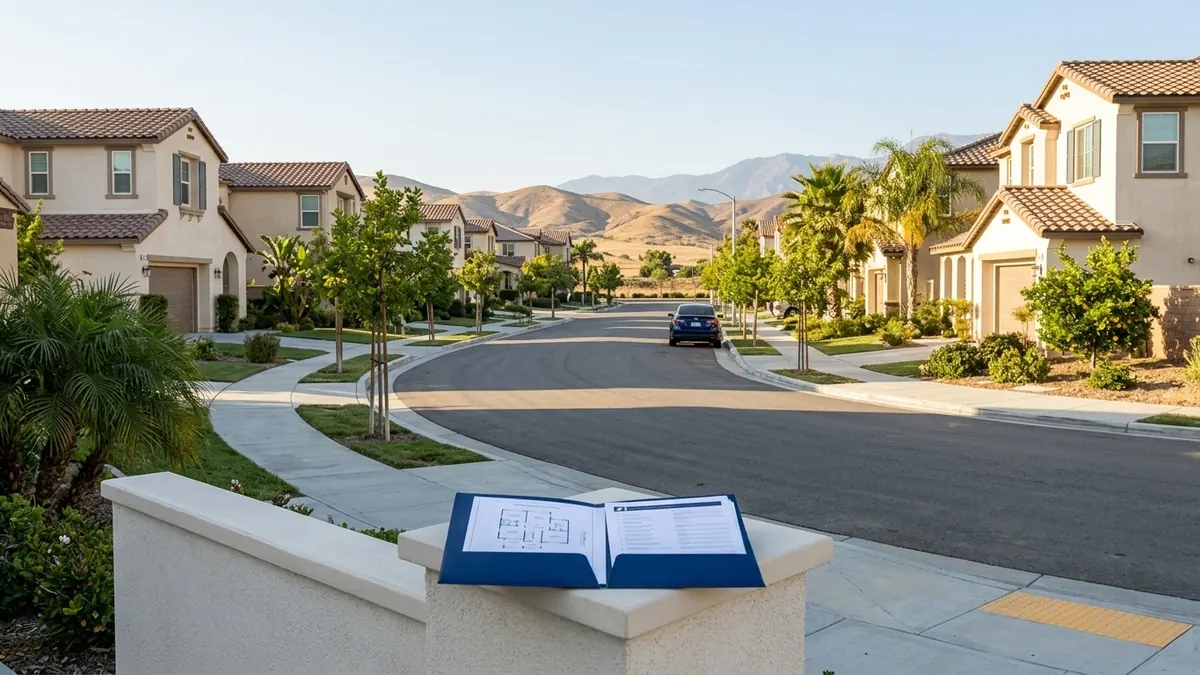
Nearby active listings are your direct competition for the buyers touring this month, so they shape your price position, your timing and how much preparation is worth doing. Closed sales show what buyers paid, and active listings show what you are up against.
On this page
Active Listings Are the Competition You Face
Nearby active listings affect your selling plan because they are the alternatives a buyer weighs against your property in the same week. Closed sales tell you what buyers have paid. Active listings tell you what buyers can choose right now, at what asking prices and in what condition. That comparison decides how your price reads, whether your timing is good, and how much preparation is worth doing before the first showing.
This matters more in the Inland Empire than a regional headline suggests. A buyer looking at a tract home in Eastvale is comparing it with other tract homes in Eastvale, and maybe a few in Corona or Norco, not with a cabin in Crestline or a condo in Riverside. Your competition is a small, local group. A headline about the whole region tells you almost nothing about that group.
Sellers often skip this step because active listings feel less real than sales. Nobody has paid those asking prices, so why treat them as evidence? The answer is that buyers treat them as evidence. A buyer forms an opinion of value by walking through five or six homes and comparing what each one offers for the money, and your home is being judged inside that set whether you studied it or not.
Closed Sales Versus What Is for Sale Now
Closed sales and active listings answer two different questions, and a good selling plan uses both. A closed sale answers what a buyer was willing to pay for a similar property under recent conditions. It is the firmest evidence available, and it is typically what an appraiser leans on when a buyer is financing the purchase. But every closed sale is history by the time you read it.
An active listing answers a different question: what does a buyer have to choose from today? It has no lag, but it also has no proof, because an asking price is a seller’s opinion until someone agrees to it. Read it as a description of the field you are entering, not as a valuation. The gap between what nearby sellers are asking and what recent buyers have paid is itself a useful signal.
The practical rule: closed sales set the range, active listings set your position inside it. If recent sales support a certain range and three similar homes nearby are asking near the upper end of it, pricing at the upper end too means competing head-on with three sellers who got there first. Pricing a little under them, with the home in comparable or stronger condition, changes the order in which buyers look.
How to Read the Listings Near You
Start with condition, because that is what a buyer sees first. Pull up the active listings a buyer in your range would tour and look at the photos the way a buyer would: updated or original kitchens, flooring, paint, the yard, anything that reads as deferred maintenance. Then ask honestly where your home would sit in that lineup. That is the single most useful piece of competitive information you can collect for free.
Days on market, the count of how long a listing has been active, is the next signal, and it needs careful reading. A listing that has sat for a long stretch might be overpriced, or it might have a condition issue the photos hide, or it might have fallen out of escrow once and be back with a story attached. A listing that went pending in days tells you buyers are active at that price and condition. The number on its own means little, and the reason behind it is what you want.
Price adjustments and the sheer number of similar homes round out the picture. A listing that has cut its price once or twice is telling you where the ceiling was not. Several similar homes for sale at once means buyers have leverage and can afford to wait, while one or two means the field is thin and a well-prepared home can stand out quickly. Count them, note their adjustments, and you have a clear read on your competition.
Local Conditions Versus Regional Headlines
Regional headlines describe the Inland Empire as one number, and that number is an average across very different places. Corona and Eastvale can be moving one way while Lake Arrowhead or Morongo Valley moves another, and even within Riverside or San Bernardino one part of town can behave differently from the next. Before you let a headline shape your plan, check whether it actually describes your street. These are the local questions that matter more.
- How many properties like yours are for sale within the area a buyer would actually search
- How quickly similar nearby listings have been going pending over the past few weeks
- How close recent nearby sales landed to their asking prices, above or below
- How the condition of competing homes compares with the condition of yours
Lindsey Shortland has published market commentary on Corona for exactly this reason: the useful reading is local. When he prepares a selling plan, the regional trend is background and the answers to those four questions are the substance. If the two disagree, the local answers win. A slow headline does not stop a well-priced home in a thin local field, and a strong headline does not rescue an overpriced one in a crowded field.
What Each Signal May Mean
The signals from nearby listings rarely point in one direction at once. A thin field with long days on market means something different from a crowded field where everything goes pending fast. The table below pairs the common signals with what they may mean and what a seller can do in response. Treat each as a starting point to investigate, not a rule, because the same signal can have more than one cause.
| Signal Nearby | What It May Mean | What to Do |
|---|---|---|
| Several similar homes listed at once | Buyers have choices and can wait | Price to stand out and finish preparation before listing |
| Nearby listings sitting for weeks | Asking prices may be above what buyers accept | Anchor on closed sales, not what neighbors ask |
| Recent price reductions on similar homes | The ceiling has already been tested nearby | Start below the reduced prices rather than above them |
| Similar homes going pending within days | Buyers are active at that price and condition | Match that condition and time your launch to it |
| Competing homes in stronger condition | Buyers will price the gap into their offers | Fix what shows, or price for the difference |
Two cautions. A signal only counts if the listing is genuinely similar to yours, so a large custom home down the road is not competition for a three-bedroom tract home even if it is on the same street. And the field can change in a week: two listings go pending and one new one appears, and what looked crowded now looks thin. Read the table against the listings as they stand the week you go live.
Adjusting Timing, Preparation and Presentation
Competition changes three decisions. Timing first: if several similar homes just listed, waiting a few weeks for some of them to go pending can put you in a thinner field, provided your own timeline allows it. If the field is already thin, there is little reason to wait. Neither choice is about predicting the market, only about choosing the week when a buyer has the fewest alternatives to yours.
Preparation and presentation follow from what the competition shows. If every similar listing has fresh paint and staged rooms, arriving without them puts you last on the tour, and the cost of matching is usually small next to the cost of being ignored. If nearby listings are tired and priced high, a clean, well-lit, honestly presented home can win on contrast without a major spend. Let the field tell you how much to spend.
Bringing the Competition Into Your First Conversation
You do not need to have done all of this before talking with Lindsey. But a first conversation is far more productive if you have looked at the listings near you with a buyer’s eye and formed a view. He will bring the closed sales and the current active field for your property type, and together you can work out where your home sits. Here is what to have ready.
- The addresses or listings of the two or three nearby homes you consider your closest competition
- Your honest read on how your home’s condition compares with those listings
- The dates that matter to you, including any purchase or move tied to this sale
- Any question about how the sale connects to financing your next home
That last item is where Lindsey’s work as both a REALTOR® and a Loan Officer is useful, because the sale and the next purchase are usually one plan with two halves, and the order they happen in matters. You are free to use any lender you like. The point is to see the whole picture early. Wherever you are in the Inland Empire, tell Lindsey what you are trying to figure out, and the plan narrows from there.
This article is general information about real estate decisions across the Inland Empire. It is not legal, tax, insurance, lending or financial advice. Active listing prices, inventory and market conditions change and should be confirmed at the time of a decision. Confirm current details with Lindsey Shortland or the appropriate licensed professional.

Written by